How to Protect Your Skin from Pigmentation in Hot Weather
Table of Contents
Introduction
Skin pigmentation problems are very common in hot weather. Because of heat, strong sunlight, sweating, and UV radiation, you can develop dark spots, tanning, melasma, and an uneven skin tone on the face.
If you are wondering how to protect your skin from pigmentation in hot weather, you are not alone. In a tropical country like India, pigmentation can develop very quickly if the skin is not protected properly.
In this article, we will understand:
Why pigmentation increases in summer
Who is at higher risk
Simple and effective ways to prevent pigmentation
What is pigmentation?
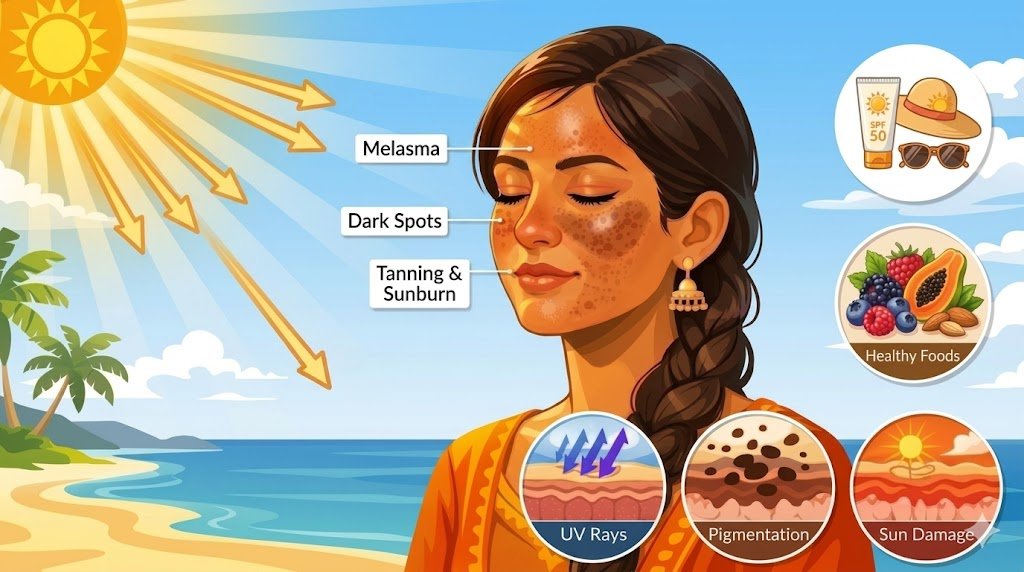
Pigmentation means the colouring of your skin. It mainly comes from a natural colour‑giving substance in the skin called melanin.
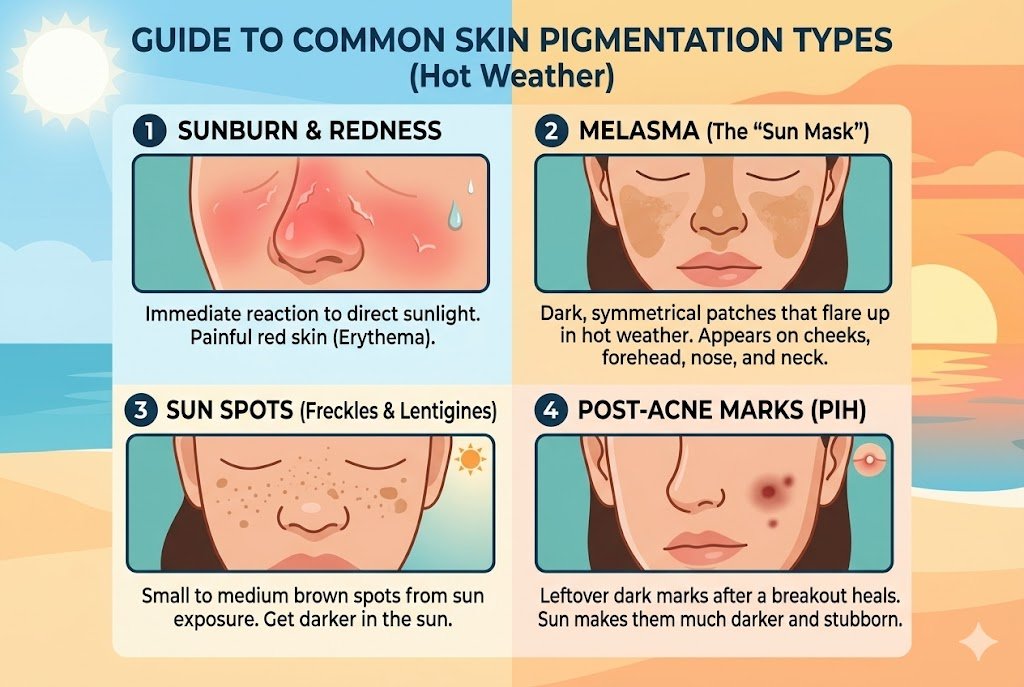
Pigmentation simply means a change in skin color or the appearance of dark spots. In hot weather, our skin produces extra color (melanin) to protect itself from harsh sunlight, leading to these 4 main issues:
Sunburn & Redness: This is the immediate effect of heat. Before the spots appear, the skin becomes red and inflamed due to direct UV exposure.
Melasma (The “Sun Mask”): These are dark, symmetrical patches that flare up in summer. They usually appear on the forehead, cheeks, nose, and even the neck.
Sun Spots (Freckles & Lentigines): These are small tan or brown spots that develop on areas most exposed to the sun. Freckles often get darker as the temperature rises.
Post-Acne Marks (PIH): Sweat and oil in hot weather often lead to breakouts. Once a pimple heals, the sun can “bake” that spot, turning it into a stubborn dark mark known as PIH (Post-Inflammatory Hyperpigmentation).
Why Pigmentation Increases in Hot Weather (summer)
Understanding why pigmentation worsens in summer is the first step to protect your skin from pigmentation in hot weather. Hot weather has some main reasons for increasing skin pigmentation:
- Prolonged Sun Exposure (Longer Days)
In summer, days are longer, which means your skin receives more UV rays than any other season — even during routine outdoor activities.
These UV rays trigger melanocytes to produce more melanin, which eventually shows up as dark spots, tanning or stubborn pigmentation. This is why summer is the most important time to protect your skin from pigmentation.
- Heat and Sweating
In hot weather, sweating increases, which can cause skin irritation and inflammation.
This inflammation can later turn into post-inflammatory pigmentation (PIH). - Skin Inflammation
After acne, allergy, insect bites or rashes, pigmentation can increase more in hot weather.
Controlling inflammation is key to pigmentation prevention.
Who is at higher risk of pigmentation?
Some people are more likely to develop pigmentation in hot weather. Knowing your risk can help you take better precautions:
People who spend a lot of time in strong sunlight, such as outdoor workers, athletes and bike riders.
People with melasma or a history of dark spots on the face.
Those with acne, eczema or frequent rashes that leave marks on the skin.
People with darker skin tones, because they naturally produce more melanin.
Pregnant women or those on hormonal treatment, like birth control pills.
Anyone using wrong or strong creams on the face, especially steroid creams.
Common Mistakes That Increase Pigmentation (Mistakes to Avoid)
Many people unknowingly make these mistakes. If you truly want to protect your skin from pigmentation, avoiding these errors is just as important as following a good skincare routine.
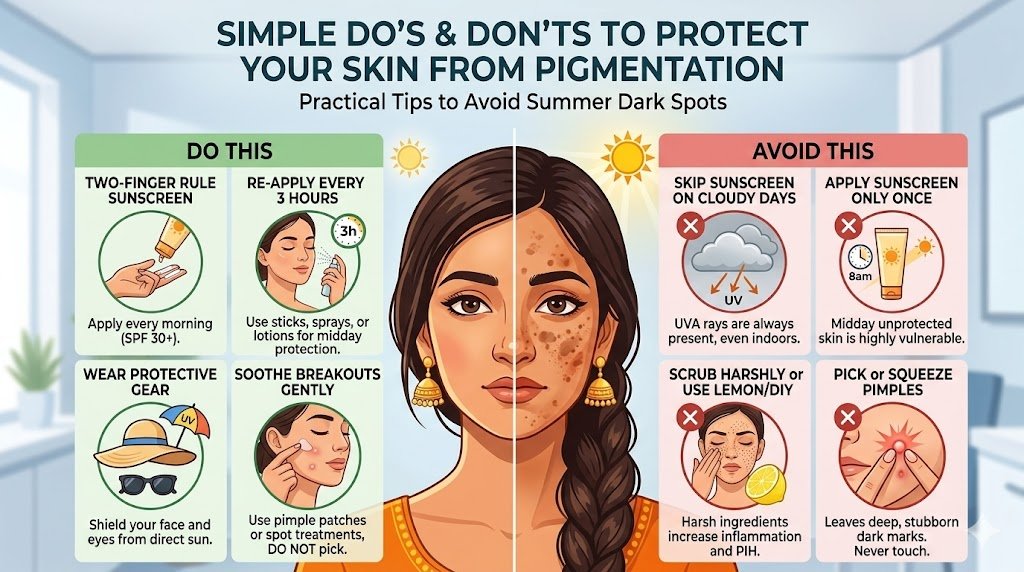
- Using Sunscreen Incorrectly (Skipping, Under-Applying, or Not Reapplying)
Many people either skip sunscreen, apply too little, or use it only once a day. Sunscreen works only for 2–3 hours, and a thin layer or low SPF won’t protect your skin properly—leading to tanning and dark spots.
Fix: Apply enough (2 finger-lengths for face) of SPF 30+ sunscreen and reapply every 2–3 hours, especially in sun or sweat.
- Using Home Remedies on the Face
Applying lemon, toothpaste, undiluted vinegar, strong scrubs or random DIY packs can irritate the skin and make pigmentation worse. - Using Steroid Creams Without Prescription
Long-term use of over-the-counter “fairness” or mixed creams containing steroids can damage the skin barrier and lead to more stubborn pigmentation. - Over-Exfoliating the Skin
Using too many peels, scrubs or strong actives together can cause redness and irritation, which later turns into post-inflammatory pigmentation. - Picking or Rubbing the Skin
Frequently scratching, rubbing, or picking pimples, insect bites or rashes increases the chances of dark marks. - Ignoring Early Signs of Pigmentation
Waiting too long and not consulting a dermatologist when pigmentation starts can make it deeper and harder to treat.
How to Protect Your Skin from Pigmentation — Start Today
Small daily habits make a big difference. The sooner you protect your skin from pigmentation, the easier it becomes to maintain an even and healthy skin tone, especially during hot weather. Remember, it is always better to prevent than to treat — so start taking steps today to protect your skin from pigmentation before it gets worse.
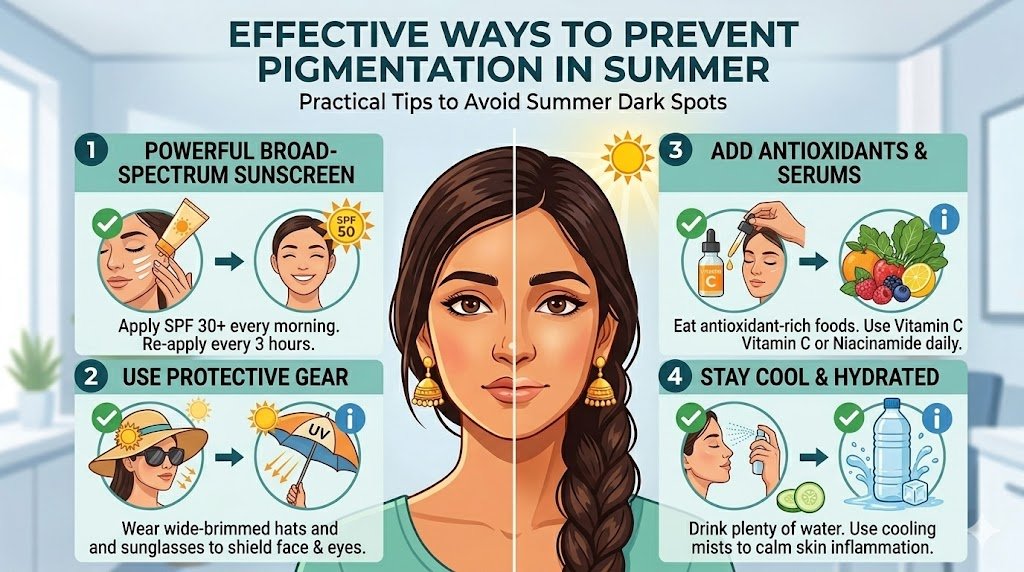
Effective Ways to Prevent Pigmentation in Summer
The best way to know how to protect your skin from pigmentation in hot weather is to follow these simple but effective steps every day:
- Use Sunscreen Every Day
Apply a broad-spectrum sunscreen (SPF 30 or 50) 15–20 minutes before going out and reapply every 2–3 hours if you are outdoors. - Protect Your Skin from Direct Sunlight
Wear a wide-brimmed hat, sunglasses and use an umbrella or scarf to reduce direct sun on your face. - Follow a Gentle Skincare Routine
Use a mild face wash and a light, non-sticky moisturizer. Avoid harsh scrubs and strong home remedies that can irritate the skin. - Avoid Picking Pimples and Rashes
Do not squeeze pimples or scratch rashes, because this increases the chance of dark marks and post-inflammatory pigmentation. - Stay Cool and Hydrated
Drink enough water, try to stay in shade or cool areas, and avoid too much heat exposure to reduce inflammation in the skin.
Doctor’s Note:
“Don’t wait for the damage to happen. Prevention is better than cure because deep-seated pigmentation can be stubborn and expensive to treat. Consistently following these steps is the best way to protect your skin from pigmentation and keep your natural glow.”
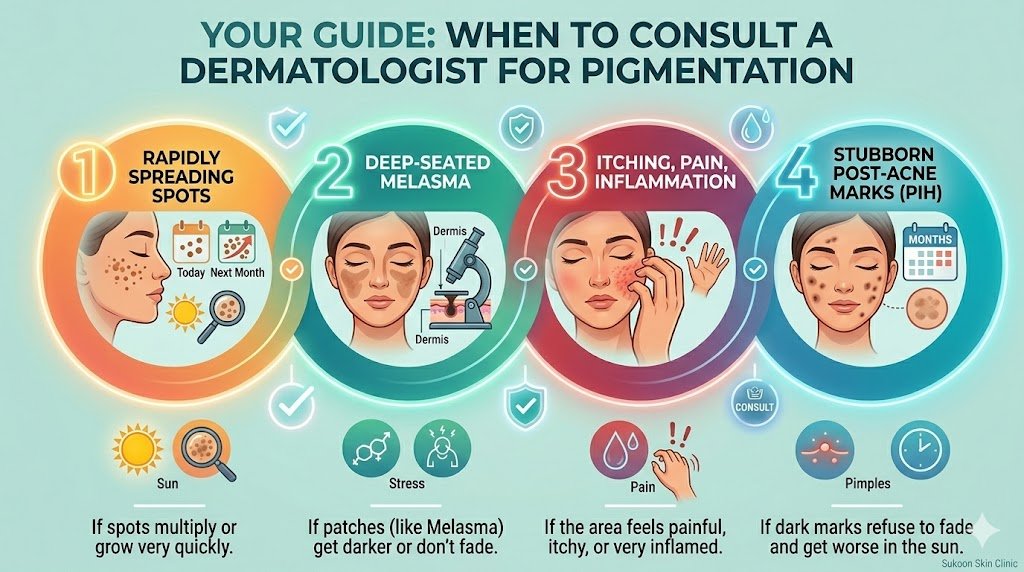
When to Consult a Dermatologist
Not all pigmentation can be managed at home. If you notice any of the following signs, it is time to see a dermatologist:
If your pigmentation is spreading fast, becoming very dark, or new patches keep appearing.
If dark spots are not improving even after 2–3 months of good skincare and sun protection.
If there is itching, redness, burning, pain, or any bleeding from the pigmented area.
If you are not sure whether it is melasma, acne marks, sun damage, or something else.
If pigmentation is affecting your confidence or daily life and you want safe, medical treatment options.
Your Skin Deserves Expert Care
Remember, trying to protect your skin from pigmentation on your own is a good start — but when home care is not enough, a dermatologist can give you the right diagnosis and the safest treatment. Do not wait too long, because early treatment always gives better results.
Frequently asked questions (FAQ)
Will sunscreen remove my pigmentation?
Sunscreen will not erase old spots, but it stops them from getting darker and prevents new spots. You still need proper medical treatment to lighten existing pigmentation.
Can I become completely fair again?
No treatment can change your natural skin colour. The goal is to reduce dark spots and tanning so your original skin tone looks more even and brighter.
How long do dark spots take to fade?
Mild pigmentation may improve in 4–6 weeks; deeper spots often need 3–6 months or more. Speed depends on the cause, treatment plan and how regularly you use sunscreen.
Is it safe to do chemical peels in summer?
Yes, if done by a dermatologist with the right peel strength and strict sun protection. Never do strong peels at home in summer, because they can worsen pigmentation.
How can I stop skin pigmentation in the sun?
Use a broad‑spectrum sunscreen daily and reapply, wear a hat or umbrella, avoid peak sun hours and do not rub or pick your skin. These simple habits greatly reduce sun‑induced pigmentation.
How to decrease pigmentation naturally?
Protect your skin from sun, use gentle skincare, sleep well and eat a healthy diet rich in fruits and vegetables. Avoid harsh “natural” remedies like lemon on the face, as they can burn and darken the skin.
Conclusion
“Pigmentation in hot weather is a very common concern, but with the right care, you can easily protect your skin from pigmentation and sun damage. Using sunscreen daily, sticking to a gentle routine, and seeking early treatment are the best ways to keep your skin healthy and even-toned all summer long.”
Do you have more questions about summer skincare? Feel free to explore our other guides on Dermagyan.com or consult a local dermatologist for a personalized skin analysis.