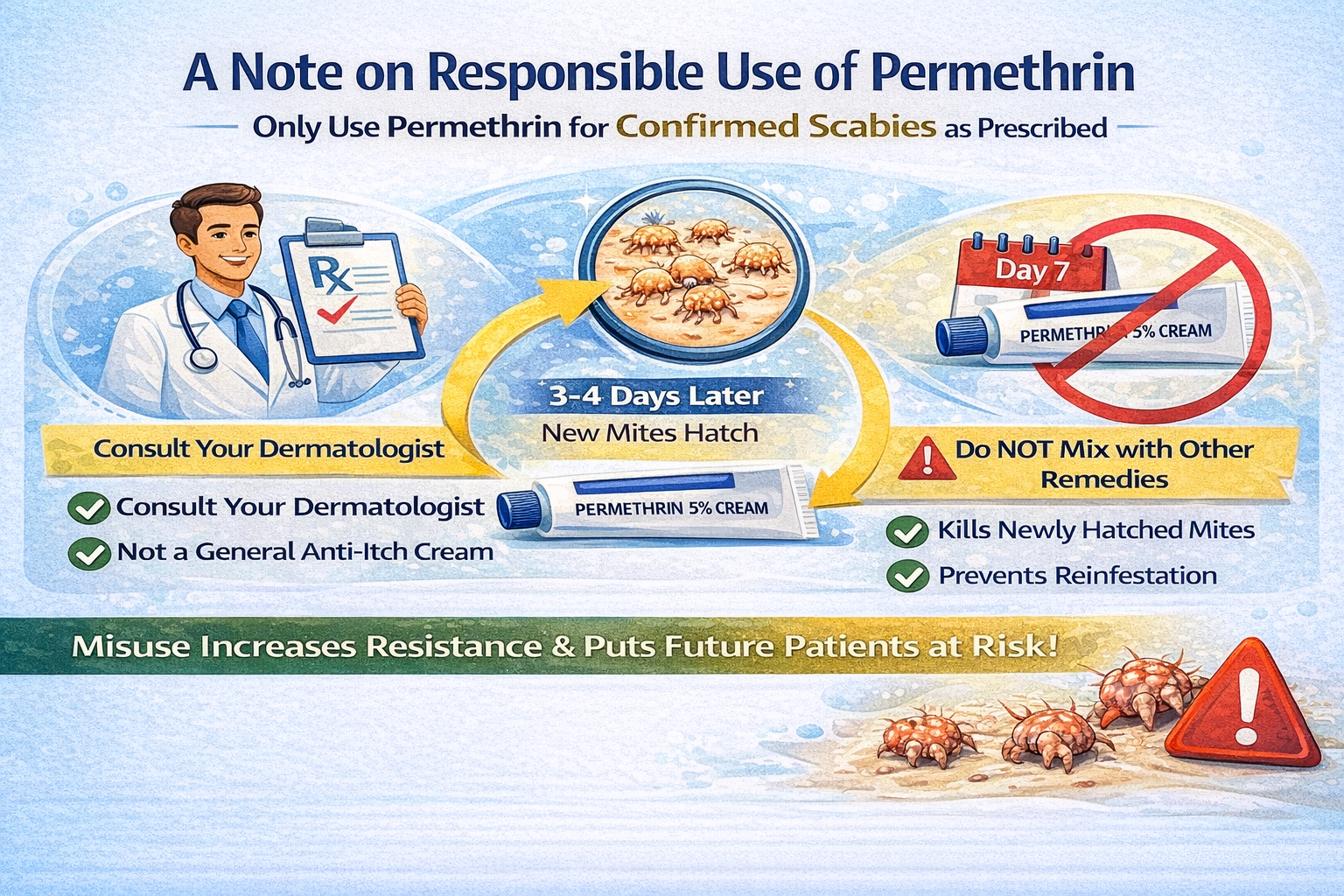

⚠️ Medical Disclaimer: Permethrin 5% cream is a prescription scabicide — not a general anti-itch cream or antiseptic. It should be used only after scabies is confirmed by a dermatologist. Do not self-medicate for general itching. If you are in Chhindwara, visit Sukoon Skin Clinic for proper diagnosis before starting any treatment.
What Is Permethrin Cream? Why Is It Called the Gold Standard?
Permethrin is a synthetic pyrethroid — a medically adapted compound originally derived from chrysanthemum flowers. When applied to skin, it penetrates the tiny burrow-tunnels that Sarcoptes scabiei mites dig into the outer layer of your skin (epidermis) and directly disrupts their nervous system, causing paralysis and death.
What makes it stand apart from other treatments:
- 90–95% cure rate with two applications
- Kills mites within 24 hours of first application
- Safe for pregnant women (all trimesters), breastfeeding mothers, and infants older than 2 months
- Recommended as first-line treatment by IADVL, WHO, AAD, and BAD
- You become non-infectious within 24 hours of first application
One thing I always explain to patients: Permethrin treats scabies — it does not directly stop itching. The itch is your immune system’s allergic reaction to mite waste and debris. That reaction can continue for weeks even after every mite is dead. More on this below.

“At Dermagyan, we turn dermatology knowledge into clear, practical care you can trust every day.”
Before You Open the Tube: Preparation Steps That Most Patients Skip
Most treatment failures I see happen not because of the cream — but because preparation was ignored. These steps are not optional:
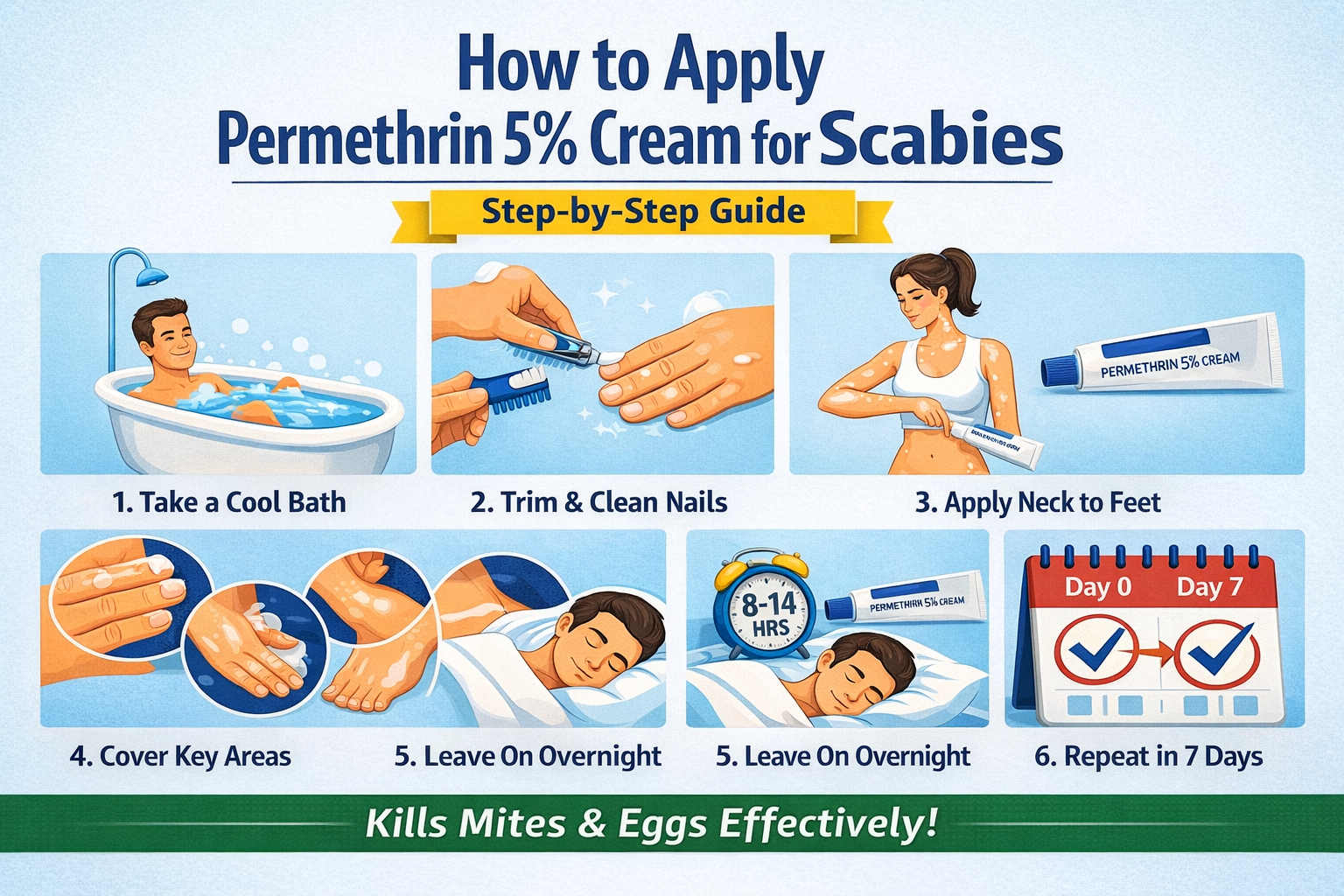
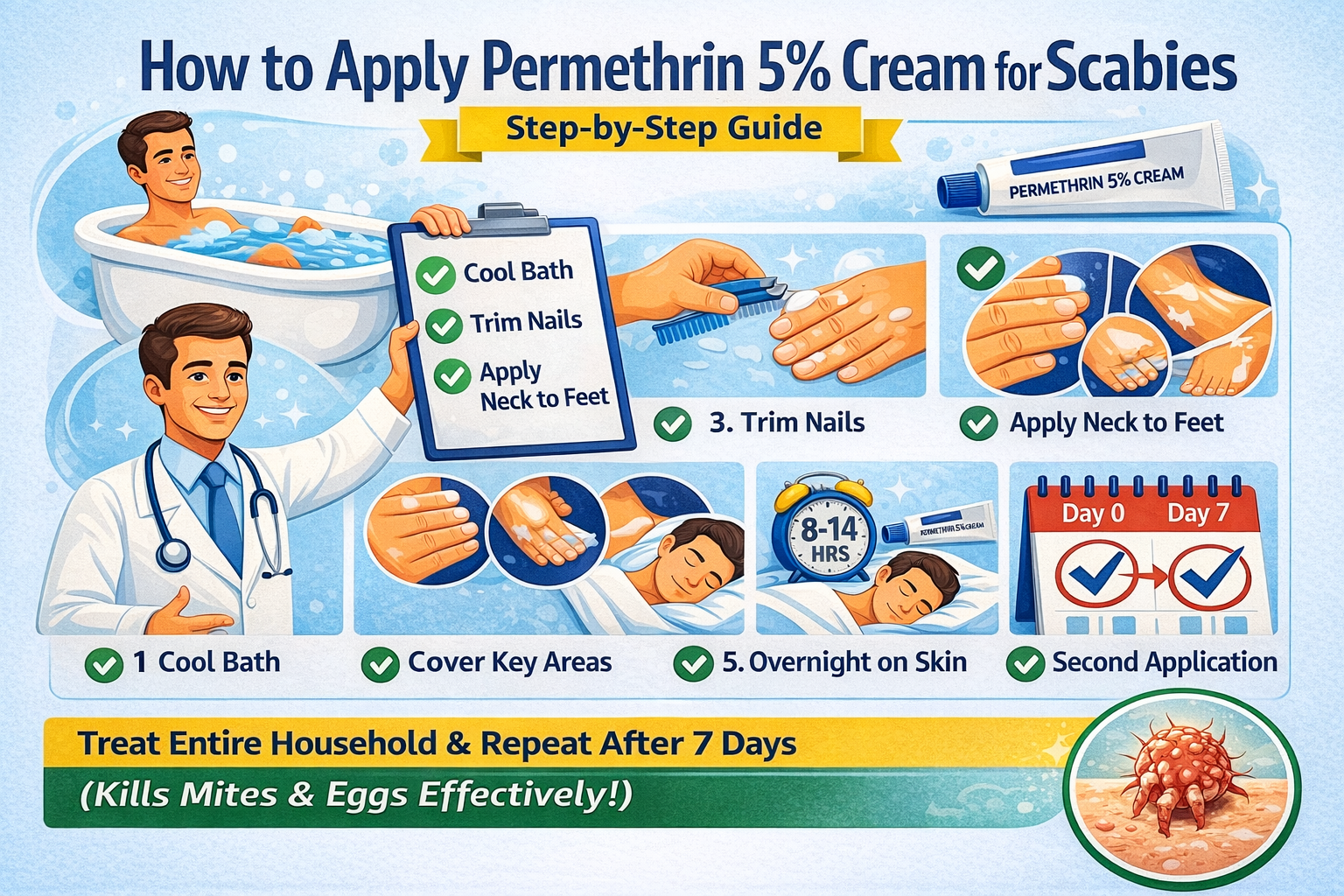
- Take a cool bath — not warm, not hot. Hot water dilates skin pores and increases unnecessary systemic absorption of permethrin, raising the risk of irritation. Cool water is deliberate.
- Dry your body completely before applying — wet skin reduces the cream’s effectiveness.
- Cut your nails short and clean under them — scabies mites hide under fingernails and survive there even after full-body application.
- Apply at bedtime — the cream needs 8 to 14 uninterrupted hours on your skin overnight.
Step-by-Step: How to Apply Permethrin 5% Cream Correctly
For Adults and Children (2 Years and Above)
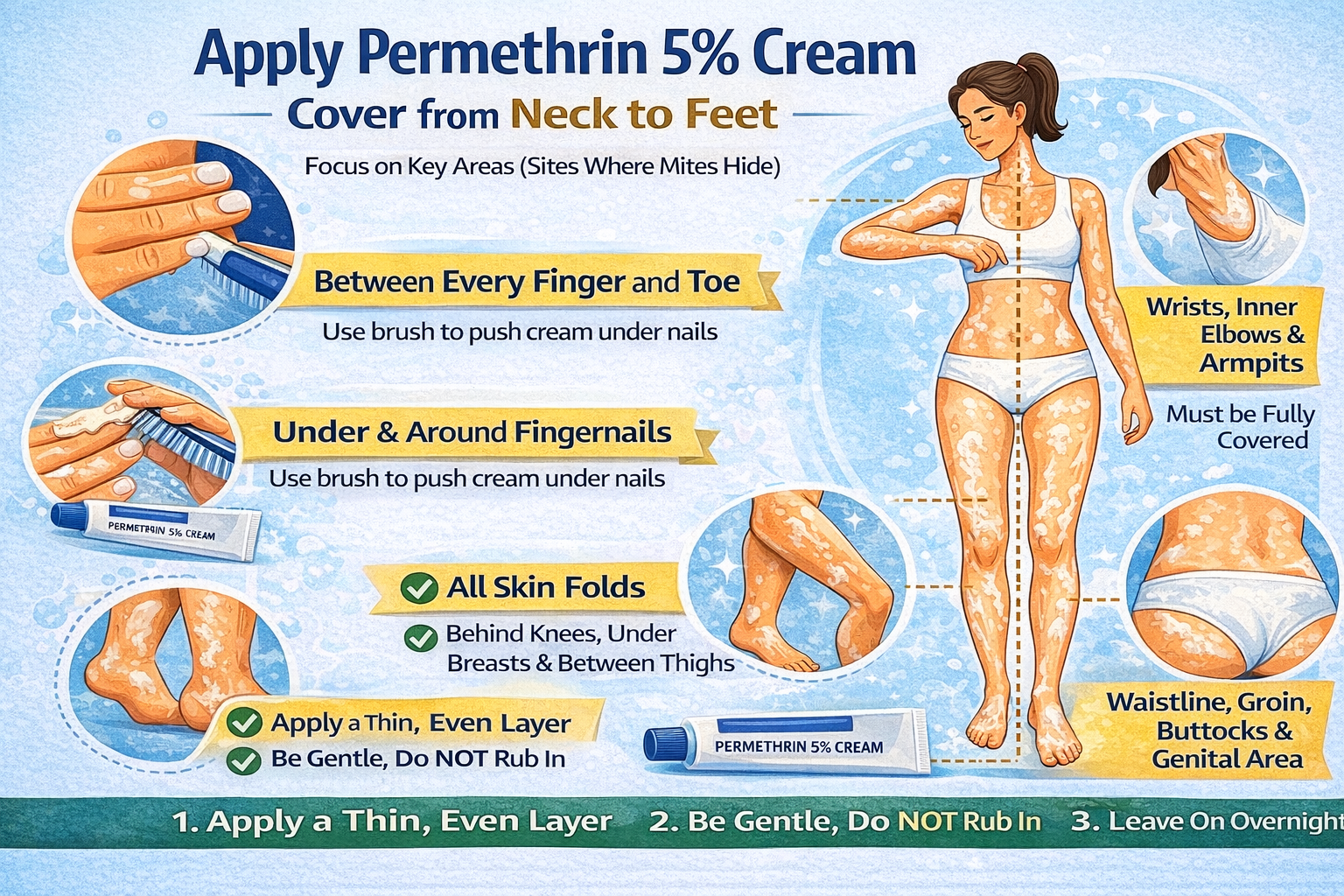
Apply a thin, even layer from the neck down to the soles of your feet. Every centimetre of skin below the chin must be covered.
Pay close attention to these areas — they are where mites hide and where most patients miss on first application:
- Between every finger and toe (finger webs — the single most common site of scabies)
- Under and around fingernails — use a soft old toothbrush to push cream under nails
- Wrists, inner elbows, and armpits
- Waistline, groin, buttocks, and genital area — must be covered fully
- All skin folds — behind knees, under breasts, between thighs
Apply gently — do not rub aggressively. Let the cream sit on the skin surface.
For Infants and Young Children (2 Months to 2 Years)
In babies and toddlers, scabies commonly involves the face and scalp — areas adults don’t need to treat. For young children, apply permethrin to:
- Scalp — including the hairline, temples, and forehead
- Face — carefully, keeping cream away from eyes and mouth entirely
- Ears and neck
- Then the full body from neck to toes, same as adults
If your child sucks their thumb, put mittens on their hands during the treatment night to prevent ingestion of the cream.
⚠️ Permethrin is NOT recommended for infants under 2 months. For very young babies, sulfur ointment is a safer alternative — your dermatologist will prescribe accordingly.
How Long to Leave Permethrin Cream On
Leave the cream on your skin for 8 to 14 hours. The overnight window is ideal — apply at 10 PM, wash off at 6–8 AM the next morning.
One detail most patients miss: If you wake up during the night to use the toilet and wash your hands, reapply permethrin to your hands immediately afterwards. Hands are the primary site of scabies reinfestation and must remain coated throughout the night.
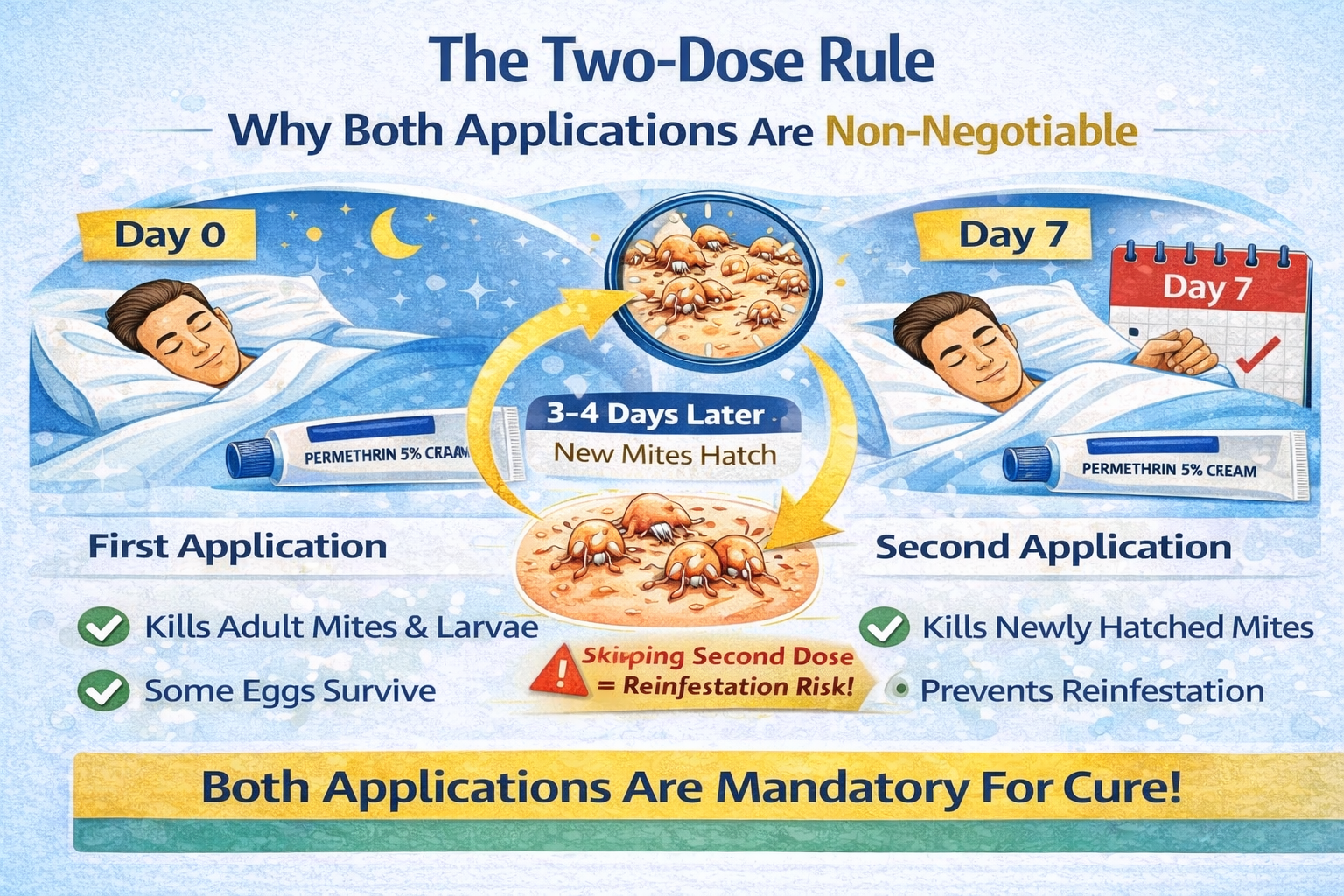
The Two-Dose Rule: Why Both Applications Are Non-Negotiable
Day 0: First application at bedtime → wash off next morning
Day 7: Second application, exactly 7 days later → wash off next morning
Both doses are mandatory — and here is the science behind it:
Permethrin is highly effective against adult mites and nymphs but has limited penetration into eggs embedded deep in skin burrows. After your first application, any surviving eggs will hatch within 3–4 days into new larvae. The second application on Day 7 kills this freshly hatched generation before they can mature and reproduce.
Skipping the second dose is the single most common reason scabies returns after treatment.
Treating the Whole Household on the Same Day
- Everyone applies Permethrin on Day 0 and Day 7
- Everyone washes their bedding and clothes on both treatment days
- Sexual contacts from the past 6 weeks should also be informed and treated
Washing Clothes and Bedding: Environmental Decontamination
- Machine-wash all clothes, bedsheets, pillowcases, towels, and undergarments used in the past 3 days in hot water at 60°C or above
- Dry on high heat for at least 10–20 minutes
- Items that cannot be machine-washed (woolens, shoes, school bags): seal in a plastic bag for at least 72 hours — mites starve and die
- Vacuum mattresses, sofas, and carpets thoroughly; discard the vacuum bag immediately
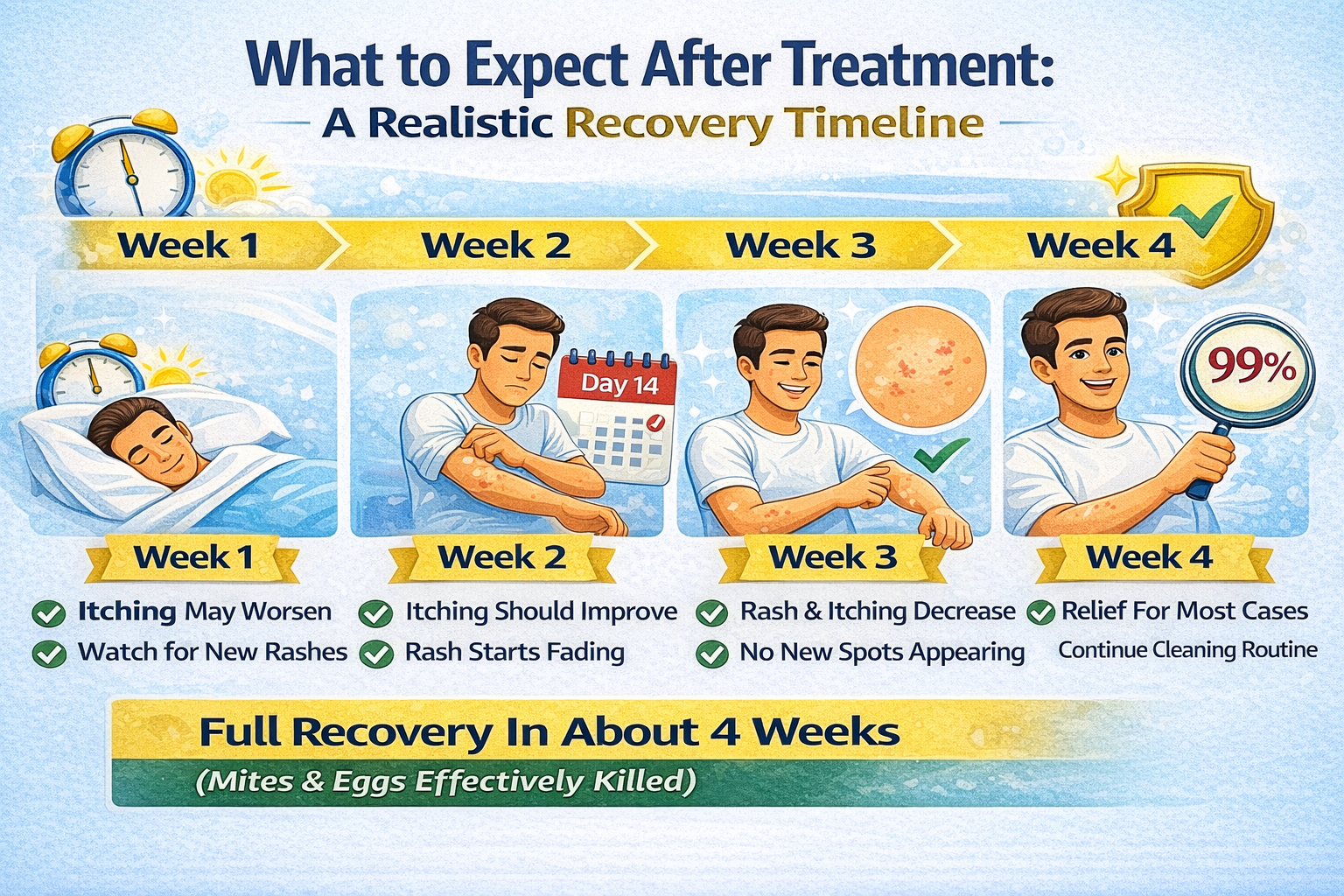
What to Expect After Treatment: A Realistic Recovery Timeline
| Timeframe | What Is Actually Happening |
|---|---|
| Day 0–1 | Mites killed; you become non-infectious to others within 24 hours |
| Days 1–7 | Itching may temporarily worsen — dead mite debris triggers stronger allergic reaction — this is normal and expected |
| Day 7 | Second application kills newly hatched larvae |
| Weeks 1–2 | Rash begins to fade; new burrows should stop appearing |
| Weeks 2–4 | Itching reduces; rash clears significantly |
| Weeks 4–6 | 90–95% cure; mild residual itch may persist |
| Weeks 6–8 | Complete skin healing in most patients |
Post-Scabetic Itch: Why Itching Continues Even After the Mites Are Gone
- Oral antihistamine — cetirizine 10mg at night for itch relief and sleep
- Mild topical corticosteroid — hydrocortisone 1% or mometasone 0.1% cream applied to itchy areas for 1–2 weeks
- Fragrance-free moisturiser — twice daily to repair the skin barrier
⚠️ Do NOT apply Permethrin again for post-scabetic itch. Repeated unnecessary application causes irritant contact dermatitis — a separate skin problem on top of scabies. Only reapply scabicide if new burrows (zigzag lines under skin) are appearing. If in doubt, return to the clinic.
Side Effects of Permethrin: What Is Normal
- Mild burning or stinging sensation on application — especially on already-irritated skin
- Temporary tingling or redness at application sites
- Mild skin dryness after washing off
Is Permethrin Safe During Pregnancy?
Warning Signs: When to Come Back to Sukoon Skin Clinic
Visit us immediately if you notice:
- Pus, discharge, fever, or rapidly spreading redness — signs of secondary bacterial infection (impetigo or cellulitis) requiring antibiotics
- New burrows appearing after completing both doses — possible treatment failure or reinfection
- Thick, hardened, crusted plaques on hands, feet, or scalp — may indicate crusted (Norwegian) scabies, requiring a different intensive protocol
- Symptoms beyond 6 weeks after completing both doses
(FAQ's) Frequently Asked Questions About Permethrin and Scabies:
Can scabies go away on its own without Permethrin?
Is one application of Permethrin ever enough?
Why does itching get worse after applying Permethrin?
Dying mites release substances that temporarily intensify the immune response. Worsening itch in the first week means the treatment is working — not failing.
My family says they have no itching. Do they still need treatment?
Do I need to fumigate my house?
Is Permethrin safe for my 6-month-old baby?
A Note on Responsible Use of Permethrin